
A Hands-On Learning Experience Exploring Protein Modification and Transport
A high school-level interactive learning experience designed to help students understand the Golgi Apparatus and cellular processes. Uses embodied learning and real-world analogies to make abstract biology concepts more accessible.
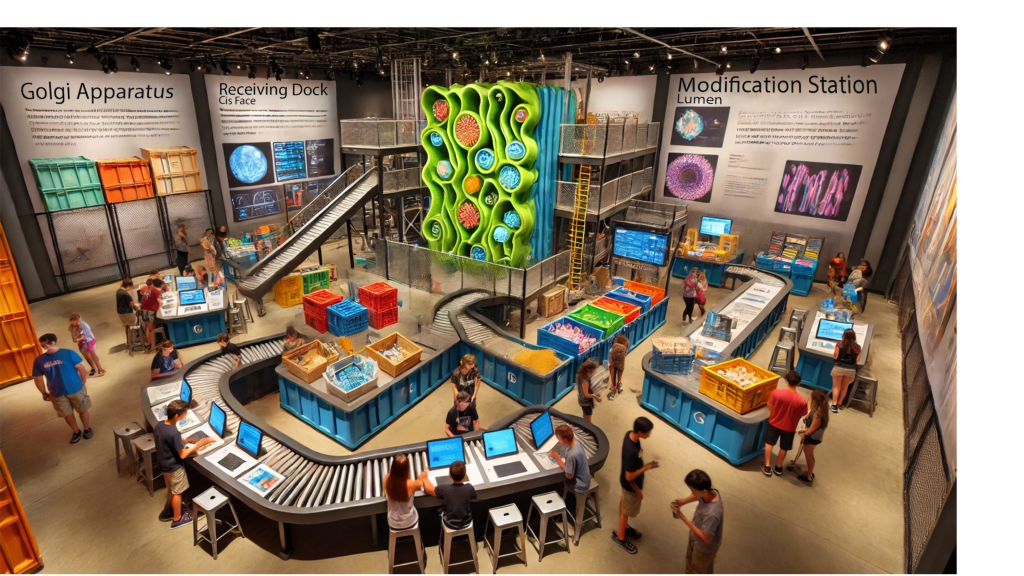
Project Overview
Target Audience
9th–12th grade biology students
Goal
Bridge the gap between abstract cellular processes and tangible understanding through interactive, immersive learning.
Concept
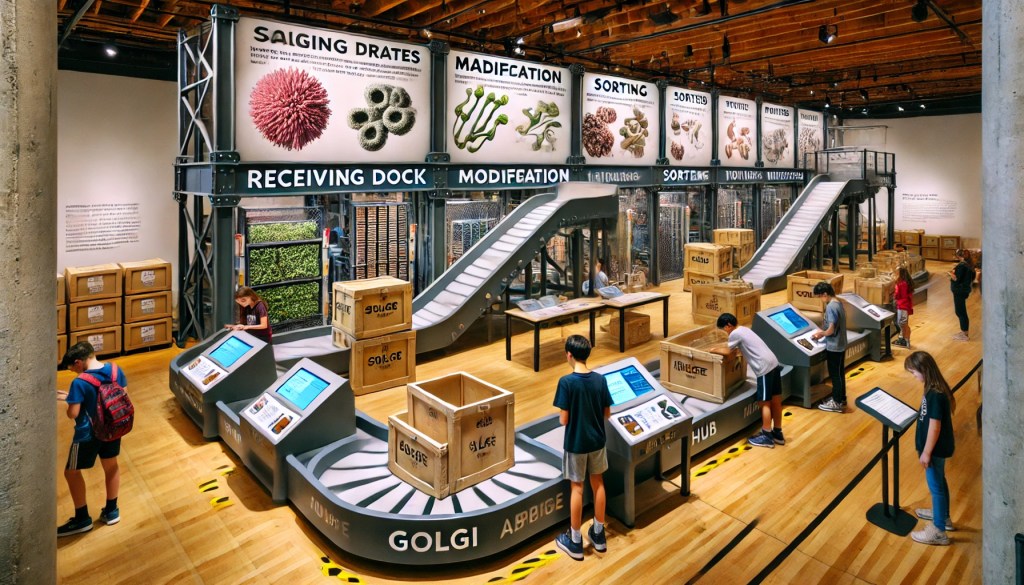
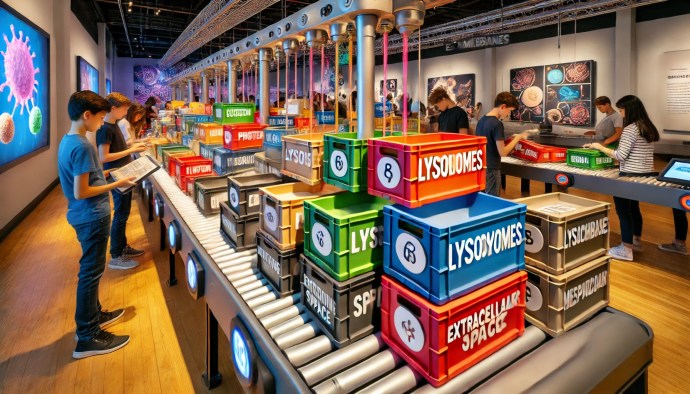
Students navigate a warehouse-inspired museum exhibit, simulating the Receiving Dock (Cis Face), Modification Station (Lumen), and Sorting Hub (Trans Face) of the Golgi Apparatus.
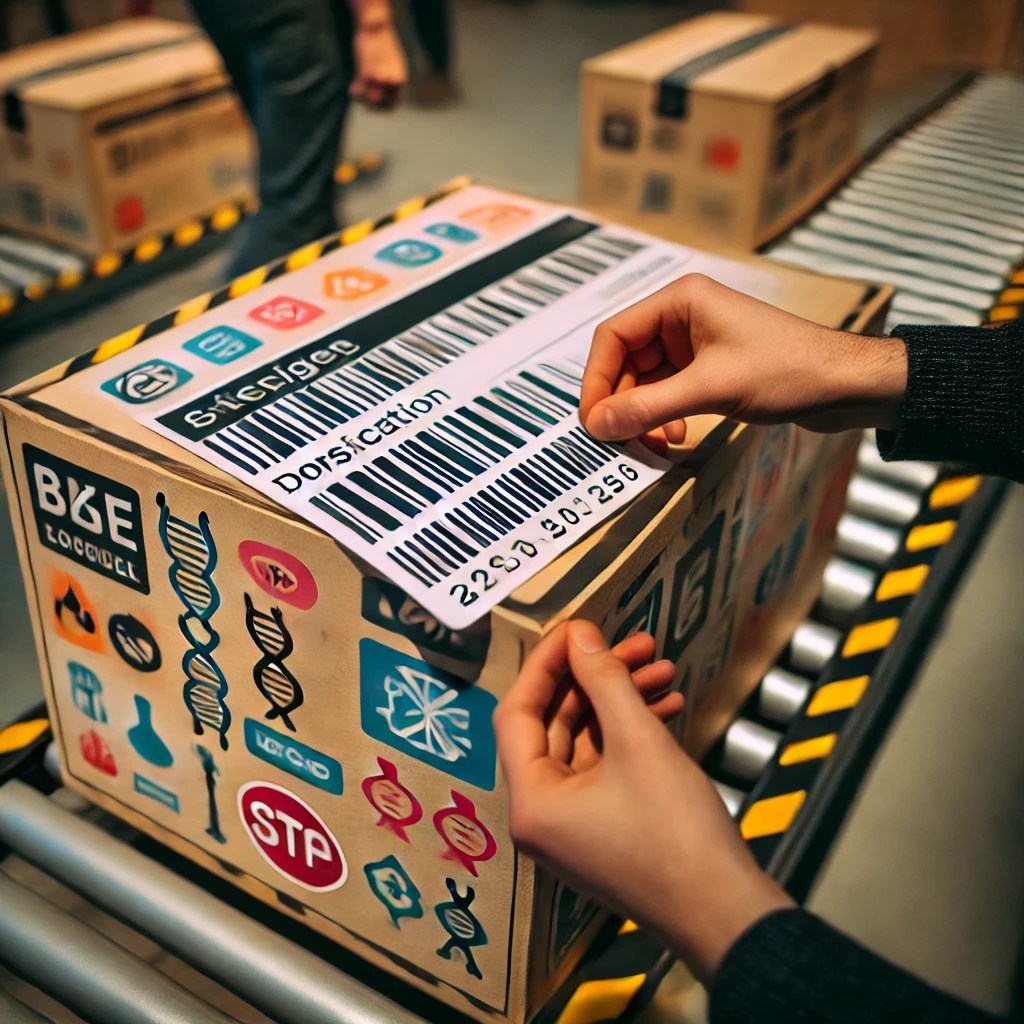
Tasks include scanning, modifying, and sorting “proteins” in a way that mimics real cellular functions.
Key Features
- Embodied Learning
- Students physically interact with exhibits to reinforce abstract cellular functions.
- Real-World Analogy
- Uses a warehouse model to make scientific concepts relatable.
- Immersive Design
- Features large-scale replicas of cellular processes with interactive elements.
- Collaborative Experience
- Encourages teamwork and problem-solving in a hands-on environment.
Research & Design Principles
Embodied Cognition
Learning through movement and interaction.
Abstraction in Science Education
Helping students transition from concrete to abstract thinking.
Sensory-Motor Engagement
Connecting physical actions to conceptual knowledge.
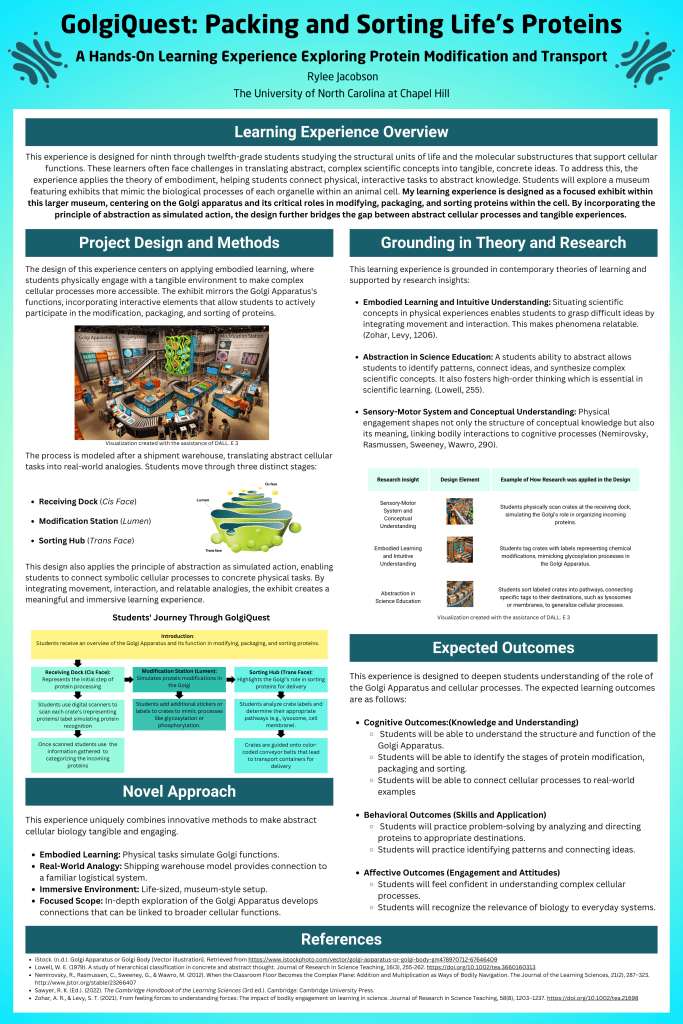
Read about the full learning experience below.
 Rylee Jacobson